
14 chapters · 1 interactive timeline · 43 images · 92 years of the kidney grille
- What this is about
- The split BMW radiator grille, from the BMW 303 of 1933 to the iX3 of the Neue Klasse in 2025
- The gap in the material
- BMW publishes no dimensions for the kidney — not in press kits, not in data sheets, not in parts catalogues. This article therefore works with sourced relative statements — why that is a finding rather than a shortcoming
- Who drew it in 1933
- Unknown. BMW names no designer in either language version of its Classic blog; Fritz Fiedler appears there for the chassis alone
- The hardest piece of evidence
- On the BMW E32 of 1986 the width of the kidney followed the engine — yet the 750i could be ordered with the narrow six-cylinder grille (chapter 7)
- The one jump with a number
- 7 Series facelift, 2019: grille 40 per cent larger, bonnet 5 centimetres higher — figures attributed to BMW, but sourced only through the trade press
- Radar through plastic
- Two-way attenuation of 2.5 dB through 4 millimetres of bumper material in the 76 to 81 GHz band — what that does to the sensor argument
- E65 against E38
- 343,073 against 340,242 cars in seven years each: a gap of 2,831 units, under one per cent
- Where the law stands
- German Federal Patent Court, 28 W (pat) 504/16 of 17 July 2019: the kidney is a distinctive element — chapter 13
- Tool
- Timeline with 30 stations from design, engineering and law
The BMW kidney is the best-known badge element in the German car industry, and the company still does not know who drew it. In both language versions of its Classic blog BMW celebrates the 303 of 1933 as the first model with the split grille and names no designer; Fritz Fiedler is listed there for the chassis only. Ninety years later the same firm argues in public about how large that part is allowed to be. Its technical case for the size was refuted by BMW itself in 1986, with a tick on an order form.
1933: a face nobody signed

Look up how the kidney came into the world at BMW Group Classic and you find a hole where a name should be. The English version calls the 303 the first model with the kidney-shaped grille, the German one says almost exactly the same. Neither names a designer. Fritz Fiedler appears, but for the chassis. The Australian site Drive records the same finding: on the origin of the design, BMW says nothing in its own company history.
Fiedler, born on 9 January 1899 in Potsdam and died on 8 July 1972 in Schliersee, came to Eisenach from Horch in August 1932 and designed the chassis and the straight six for the 303. His English Wikipedia entry lists his work from the 326 to the 507 and mentions the kidney nowhere. BMWism files him under engineering.
Exactly one source ties a name to a technical reason, and it comes from inside the company; the company historian Horst Mönnich is quoted in the German Wikipedia article on the kidney:
Beim Kühler merkte man die Handschrift Fiedlers. Er hatte ihn in leicht geneigter Form angelegt und die Ecken abgerundet, um den Luftwiderstand zu verringern, was wie von selbst die sogenannte BMW-Niere ergab.
Horst Mönnich, company historian, quoted after [S06]
That is company history writing, not a design document, and it remains the firmest attribution anyone can find. The others hold less. Peter Szymanowski, documented for the body of the 328, appears in no checked source for the 303; for Alfred Böning, who engineered the earlier 3/20, there is no evidence at all.
That leaves the most persistent rival claim, and it comes from Bruchsal. Rudolf and Fritz Ihle, two master mechanics, built special bodies there from 1930 on Dixi, BMW, DKW and Fiat. The German Wikipedia article on the kidney says Ihle supplied roadster bodies for the BMW 3/15 from 1932, „angeblich bereits mit dem nierenförmigen Kühlergrill“ — supposedly with the kidney grille already, and the word „supposedly“ is the source’s own. The entry on the Ihle brothers is blunter: the workshop used the usual rectangular grille first and only changed around 1933.
Dating is the sore point of the nice story. The often-cited „Ihle Sport Typ 600“ with a split grille sits on a BMW 3/15 built in 1929, but it surfaced only in 1934, which is after the 303. PreWarCar still concludes: „We’re not convinced. Not at all.“ Drive leaves the question open, and that is the honest position.
A second gap belongs at the front, because it shapes the whole article: BMW publishes no kidney dimensions. Neither press kits nor data sheets nor parts catalogues give the width or height of the grille, and the US design patents show drawings without measurements; anyone who wanted a timeline in millimetres would have to go and measure.
Why the kidney is split at all
Four explanations circulate for the split, and only one of them carries an argument from the period; the aerodynamic one comes from Mönnich and is quoted above: a tilted surface, rounded corners, less drag. Motorsport-total likewise gives an aerodynamic purpose for the two tilted faces. That too is secondary literature. But it is the only explanation that is argued at all.
The second reading points to cooling, because the 303 was BMW’s first six-cylinder car: bmwblog writes that large upright grilles cooled the six better. It sounds plausible; primary evidence is missing. The third claims BMW wanted a badge from the start — for which nothing from the 1930s survives. The fourth, that a load-bearing part in the middle forced the split, could not be substantiated; what sat behind the mask of the 303, one radiator or two, no source describes.
What explains most in the end is the body the grille had to fit into. The 3/20 measured 3,200 millimetres long, 1,420 wide and 1,550 tall. The 303 grew 700 millimetres in length and 250 in wheelbase over that predecessor, but at 1,440 millimetres it stayed practically as narrow, and at 1,550 it was exactly as tall. So the grille had to grow upwards, because sideways it gained not one centimetre, and that question of space explains the upright first kidney better than any intention read into it afterwards.
How BMW handles its own origin stories shows in the parallel case of the badge. Fred Jakobs of BMW Group Classic has cleared it up: the white and blue roundel is not a propeller. It goes back to the Rapp Motorenwerke of 1913; in 1917 BMW replaced the Rapp horse with the Bavarian state colours and reversed them, because the law of the day barred sovereign emblems from company marks. The propeller comes from an advertisement of 1929. Jakobs concedes that BMW long took little trouble to correct the myth.
The grille follows the same pattern. A pretty, unsourced story from Bruchsal stands beside an official version that withholds the author. You need not be a cynic to suspect a system in that: a brand that explains its symbols loses the right to interpret them.
Narrower, flatter, absent: 1936 to 1959
The first shrinking of the kidney came not in 2025 but in 1936, and at this point the argument of recent years loses its edge. On the BMW 326 the kidney became narrower than on the 303, and that is the first documented narrowing of all; the 328 of the same year stayed tall and narrow and sat between the headlamps. Its Mille Miglia win in 1940 was taken at an average of 166.7 km/h.

After the war the tall kidney returned, clearly pulled in at the waist. Peter Szymanowski drew the BMW 501 in house; 8,911 of the six-cylinder cars were built up to 1958. BimmerToday calls the mix of tall upright kidneys and smaller horizontal openings below them unhappy; the nickname „Barockengel“, baroque angel, was given by the public, not by the factory.

The decisive cut was made by an outsider. Albrecht Graf von Goertz was commissioned in November 1954 and laid the kidney down: the 503 of 1956 was the first BMW with a flat, fully chromed twin kidney, and the reason lay in the engine bay, because with the V8 the front radiator no longer did the cooling alone. The 507 turned that into two large horizontal openings, which BMW itself calls a radical reinterpretation; at a height of only 1,257 millimetres, exactly 252 production cars were built up to 1959.

Alongside all this BMW sold cars with no kidney at all, and one of them saved the company. The Isetta had a front door, a rear engine and nothing to cool at the front; the BMW 600 of 1957 inherited that nose, and the 700 ran without a grille for the same reason. Giovanni Michelotti delivered the design in July 1958, and it was worked out under Wilhelm Hofmeister.


The figures are the strongest objection to any account in which the kidney decides the life and death of the brand. More than 190,000 examples of the 700 were built up to 1965, over 35,000 of them in 1960 alone, and those cars accounted for 58 per cent of total turnover that year. The car that carried BMW through its hardest years had no BMW face.
How often the kidney has changed direction since is easiest to see in the timeline below this paragraph. Try the filters: they separate designs from technical and legal turning points. Every station names the source code under which you will find the evidence at the end of the article.
Herbert Quandt insists on the kidney
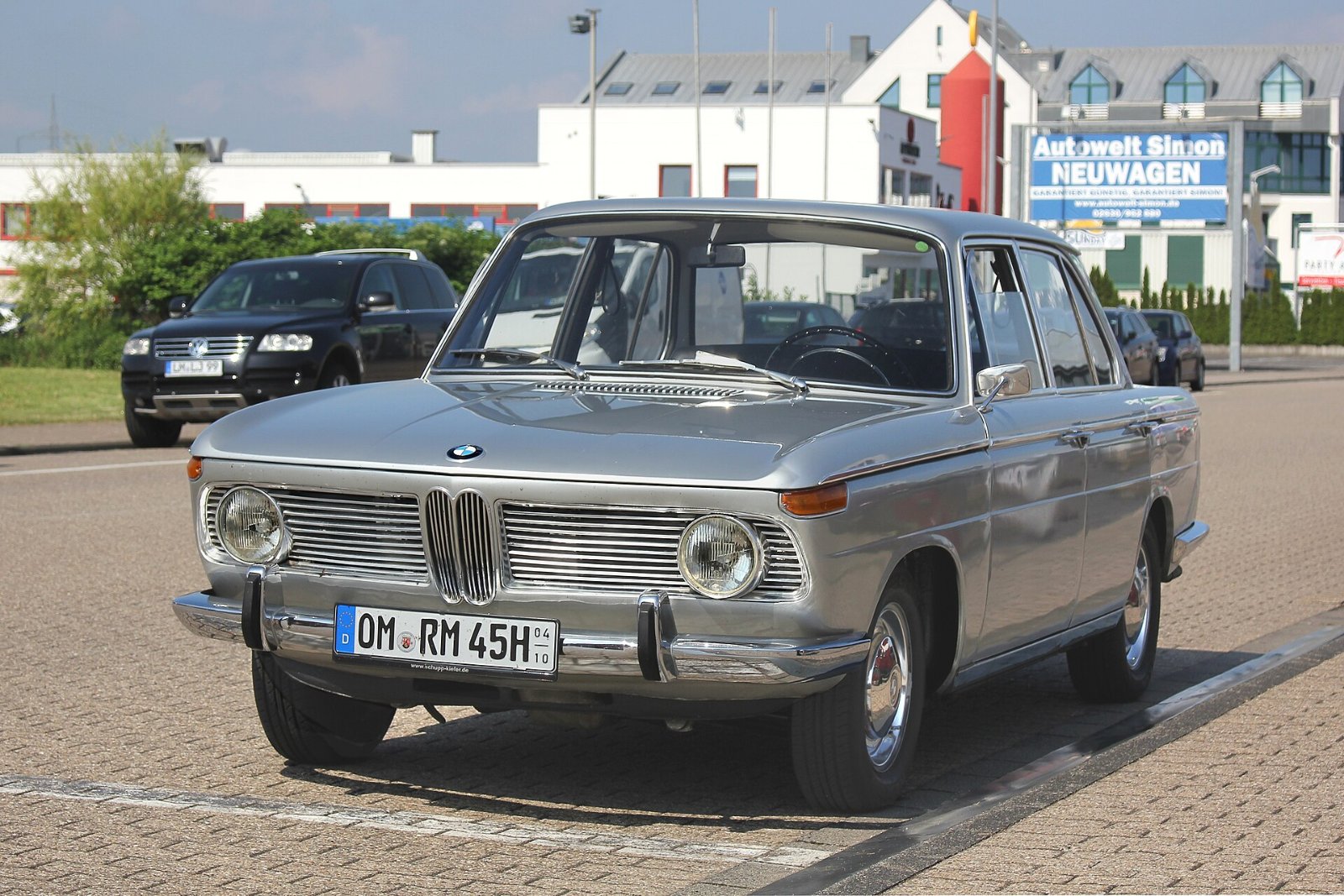
That the kidney still exists is down to a remark by the company’s major shareholder. When Herbert Quandt was shown the finished design for the Neue Klasse, he insisted on finding the twin kidney in it, and the designers moved it into the middle of the front at short notice. Out of that came the face BMW wore for the next two decades: a small twin kidney in the centre, flanked by a continuous horizontal grille.
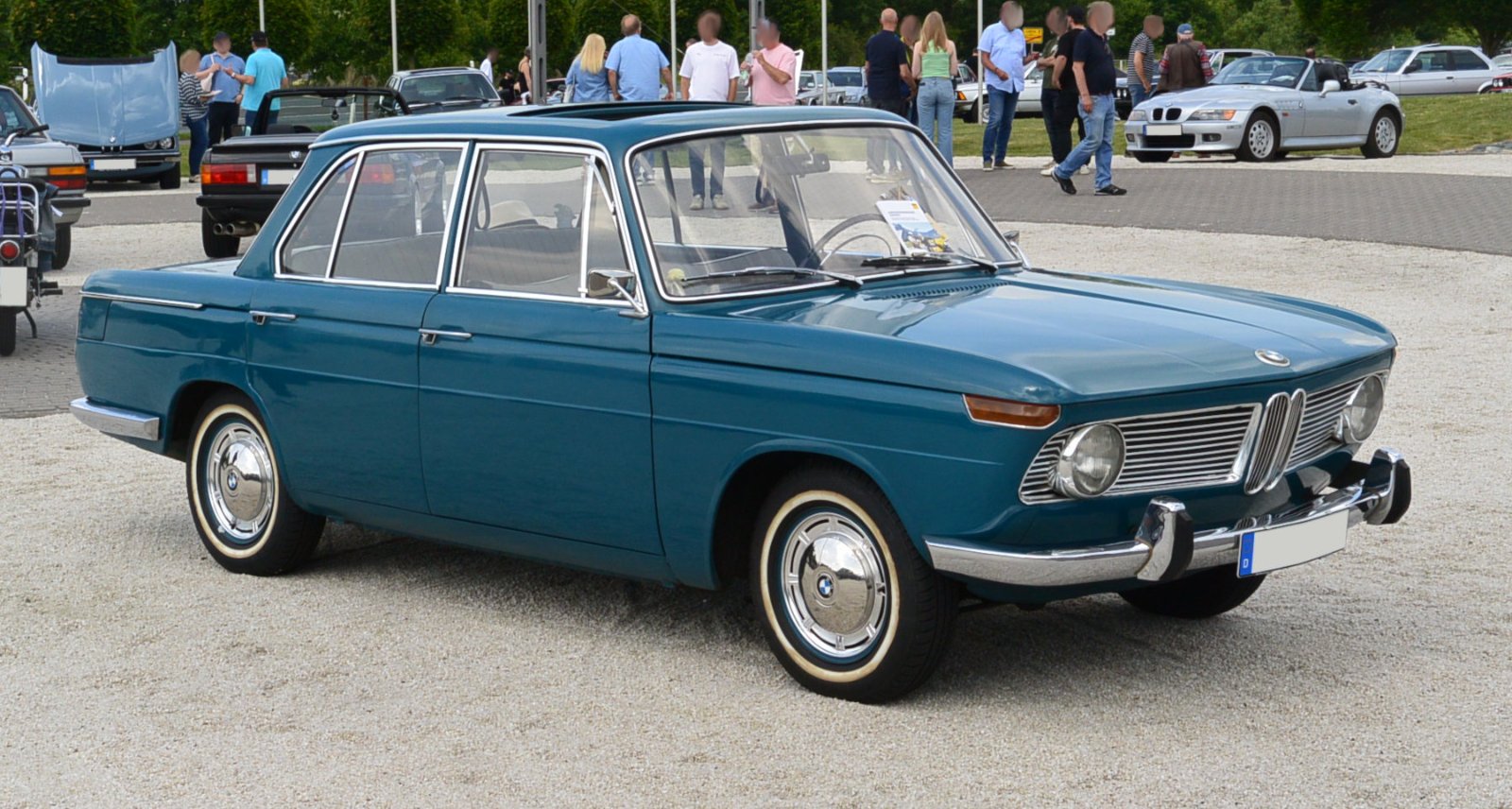
The 1500 had its premiere at the 1961 Frankfurt show; by June 1962 there were around 25,000 advance orders. The announced price was 8,500 marks, the price paid 9,485. It slowed nobody down: on 18 August 1965 the hundred-thousandth Neue Klasse left the line, and across all variants 350,729 cars were built.
Wilhelm Hofmeister, born on 19 May 1912 in Stadthagen and died on 11 January 1978, ran BMW design from 1955 to 1970 and worked with Michelotti on the Neue Klasse. He was responsible for the 700, the Neue Klasse, the 02 and the E3. Not one sentence of his about the kidney survives. The man who brought it to its narrowest seems never to have spoken about it.

On the 3200 CS Giorgetto Giugiaro set the kidney into a large grille panel that filled almost the whole front, and so supplied the template for what the trade press later called the grille within the grille. The E3 and E9 carried it out from 1968. BMW built 221,991 saloons and coupés of the E3 and 30,546 cars of the E9, and the twin headlamps moved into the grille of the E3 shaped BMW design for decades, according to the source.


Paul Bracq stands the front on its nose
Paul Bracq, born in 1933, came to Munich from Mercedes-Benz in 1970 and stayed only four years, but in that time he set the face of the brand for a decade. His tool was not the kidney itself but the surface it sits in; he tilted the nose forward, drew it to a point and let the kidney overhang slightly. It began with the BMW Turbo study of 1972: two prototypes, 276 hp, 250 km/h. BMW later carried its shapes over to the M1, the 8 Series and the Z1. How its kidney was executed, the source does not describe.
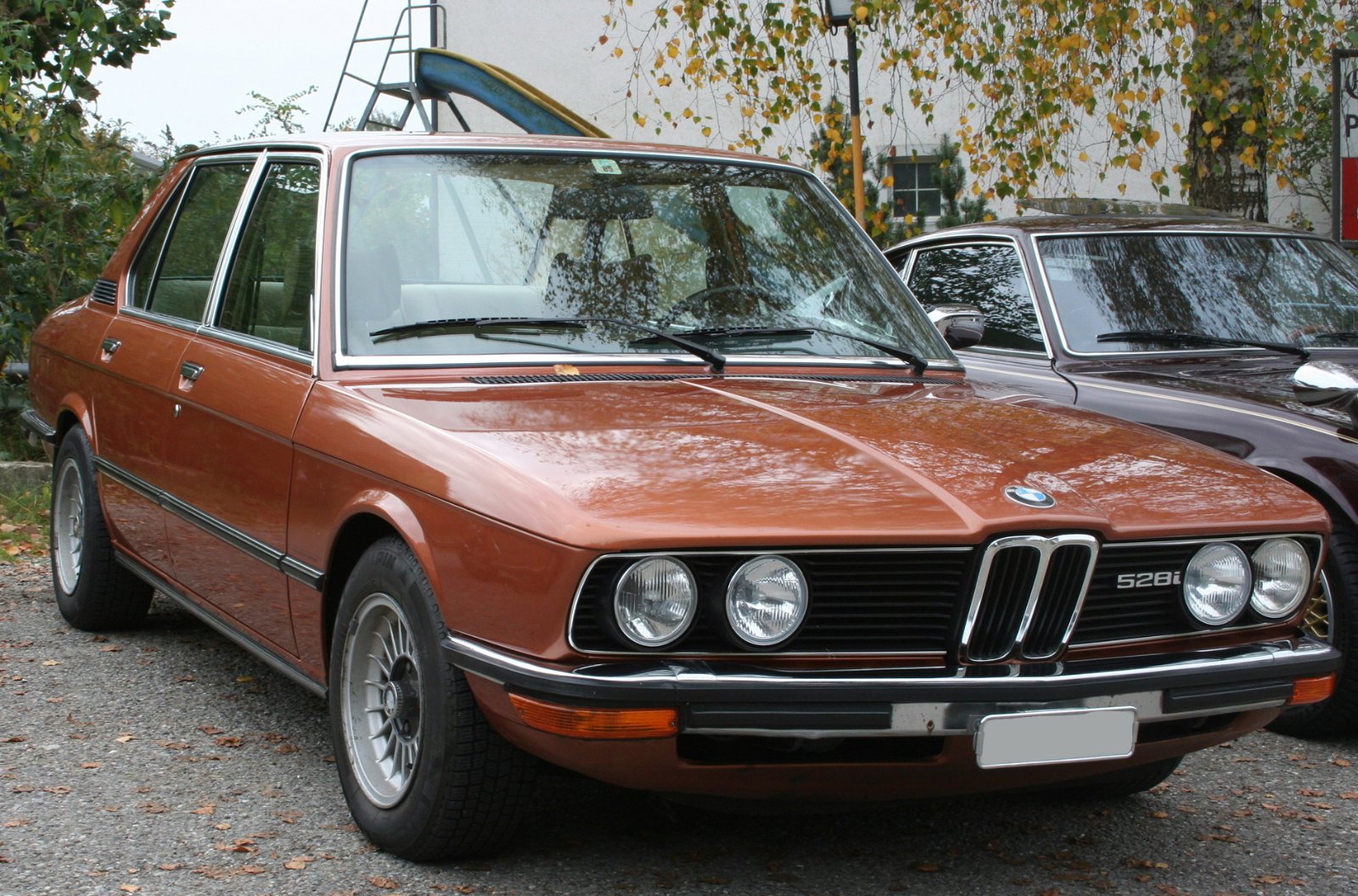
On the E12 the sources contradict each other, and the contradiction can only be narrowed down. Wikipedia names Bracq as head of design and Marcello Gandini of Bertone as co-designer of the exterior, with Bracq finalising the design in 1971. Driven to Write instead credits the E12 and E28 to Wilhelm Hofmeister with Gandini assisting. But Hofmeister left in 1970 and Bracq arrived the same year; the chronology therefore favours Bracq — though neither source says so outright.
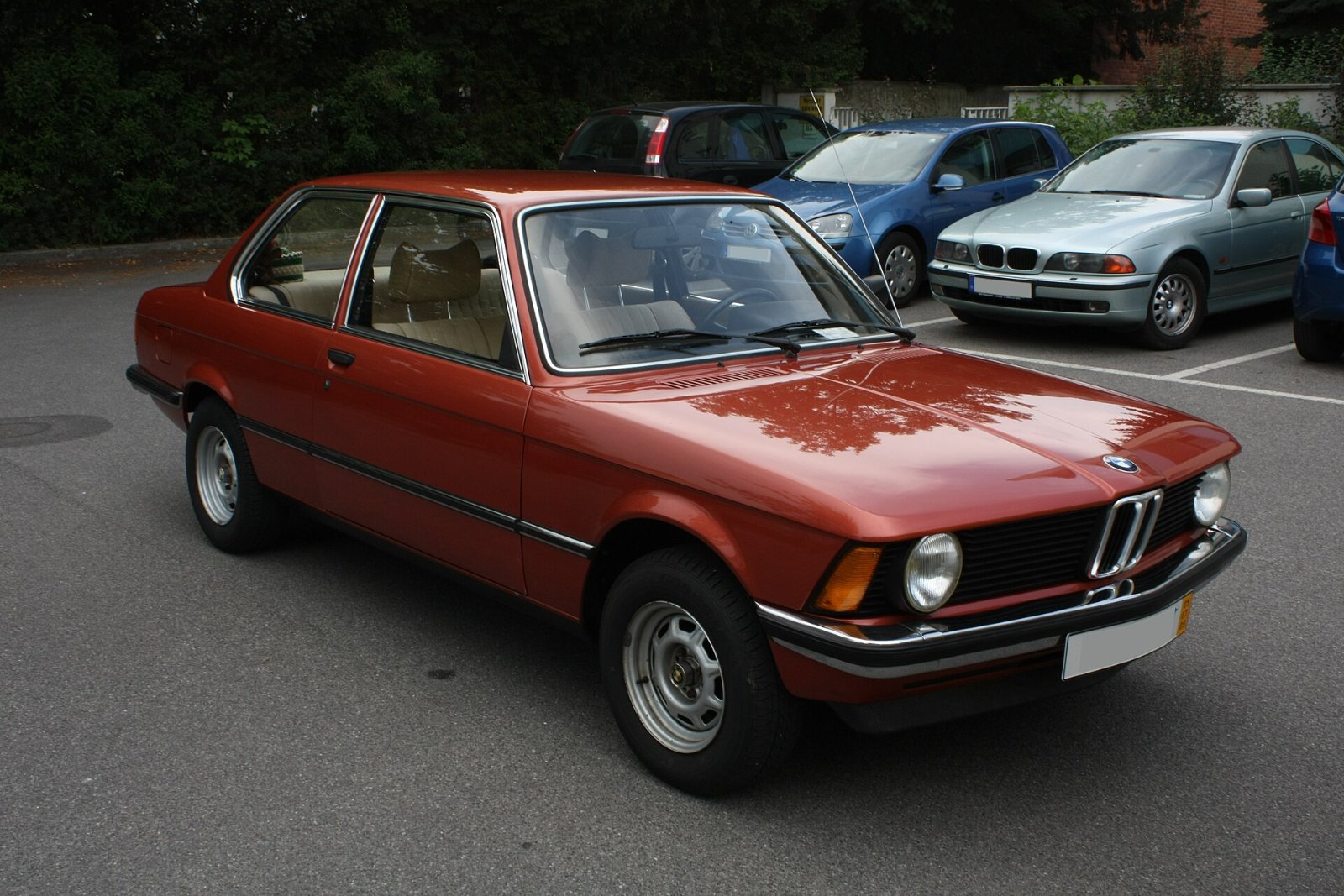
The E21 shows most clearly what Bracq had in mind for the part. Its twin kidney stands visibly proud of the mask, slightly scoop-shaped, and reaches up onto the bonnet; Jalopnik calls it „vividly protruding“. From 1976 the E24 turned that into the shark nose, still regarded as its defining feature; exactly 86,216 cars were built up to 1989.


At the end of this era stands the car with the smallest kidney BMW ever built. Giugiaro drew the M1 at Italdesign, taking cues from the Turbo, and it measured 4,361 millimetres long, 1,824 wide and just 1,140 tall. No upright grille fits into a nose that low. BMW itself calls the M1’s kidney one of the smallest ever to adorn a BMW; between 1978 and 1981 only 453 cars were built, 399 of them for the road and 53 for the track.

Under Claus Luthe the kidney moves into the bonnet
Claus Luthe, born in 1932 and died on 17 March 2008 in Munich at the age of 75, made the kidney smaller than any head of design before or after him. His route there ran through FIAT in Heilbronn, through NSU with the Prinz, the Ro 80 and the K70, and through VW and Audi. From 1976 to 1990 he ran BMW design.
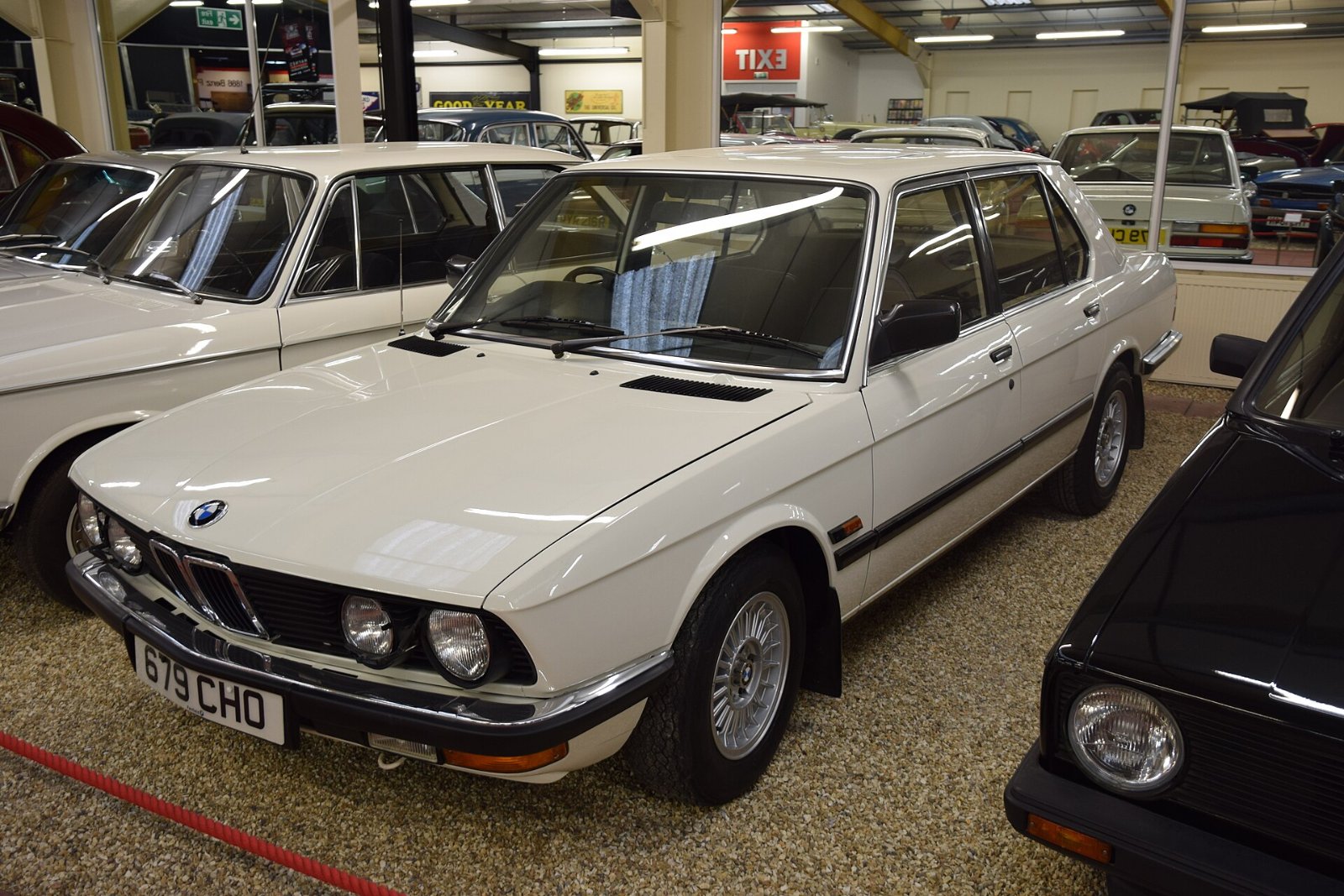
What happened to the part in his fourteen years can be said in one sentence: the kidney moved into the bonnet and lost its independence. On the E21 it had still stood in front of the mask; on the E30 it sits flat and low in the nose, and on the E36 it lies directly in the bonnet panel. Luthe left nothing on record about the kidney, but his principle that form must follow function survives, along with a line on aerodynamics: „If a wind tunnel had been available during RO80 development, many things would have been simpler.“

The E30 is more interesting than its small flat kidney suggests; it has become the unit of measurement the current comparisons hang on. When BimmerLife notes that four E30 kidneys fit into those of the X7, two per side, that is not a set of measurements but an image — and it is the image the argument has rested on since 2019. Around 2,433,000 cars were built, drawn under Luthe by Boyke Boyer, with bmwblog additionally naming Ercole Spada.

On the E36 this movement reached its low point, and BMW describes it in its own words: a flat, horizontal twin kidney with markedly rectangular forms. Its twin headlamps sat behind shared glass covers for the first time. No checked source gives a total production figure; only the Touring is documented, at around 105,606 cars. It was drawn under Luthe by Pinky Lai and Boyke Boyer. It was Luthe’s last project.

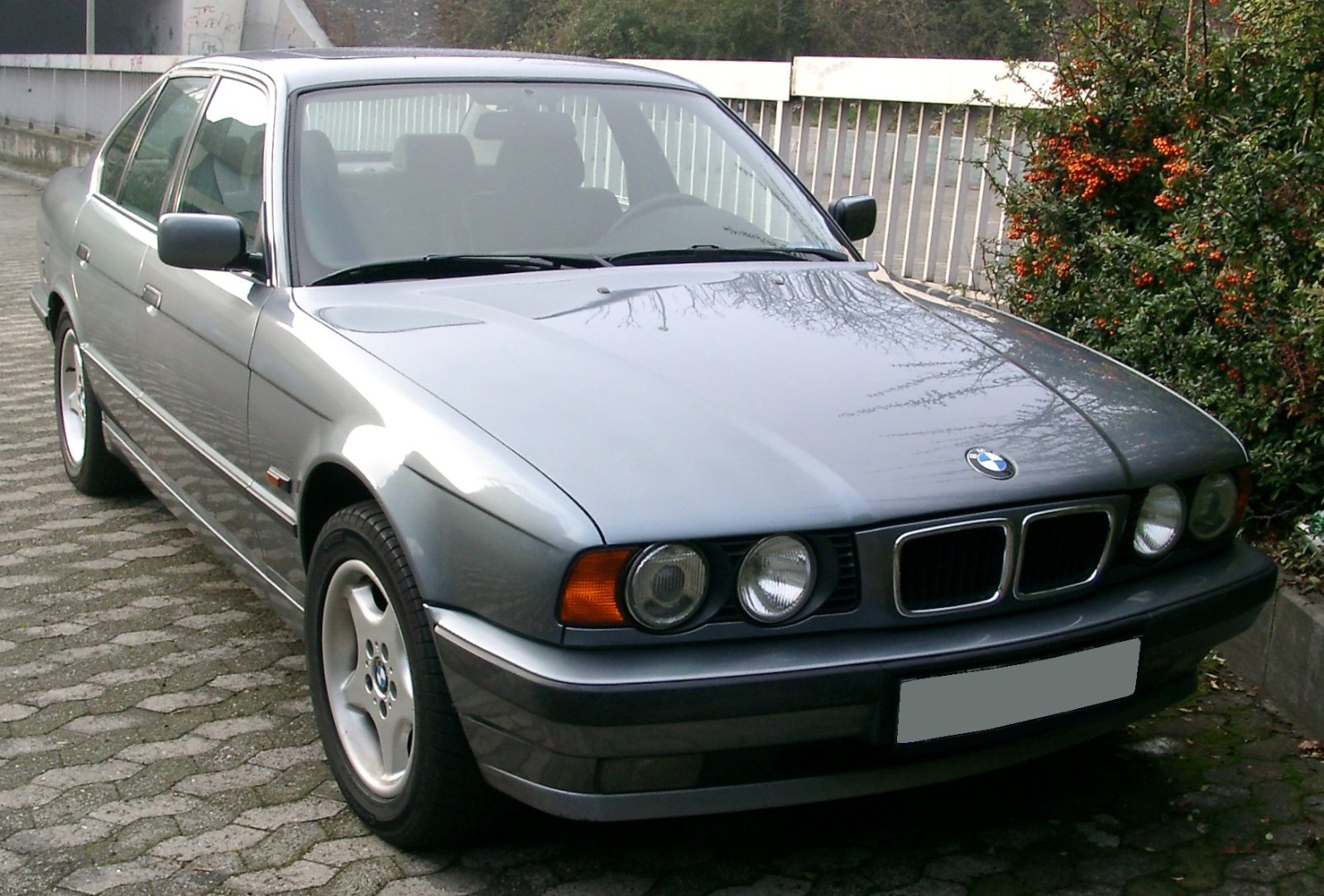
The years that followed carried the idea on without changing it. The E38 arrived in 1994 with the kidney in the bonnet panel, drawn by Boyke Boyer first under Luthe and then under Wolfgang Reitzle; 340,242 cars were built up to 2001.

The optional extra that answers everything
If you want to know whether a large kidney ever served cooling, you do not need a wind tunnel report. You need a price list from 1986. The E32 came out as the 7 Series that year, drawn as a concept by Ercole Spada and for production by Hans Kerschbaum, with Claus Luthe as design director. It was a large car: up to 5,029 millimetres long and 1,845 wide. Up to 1994, 311,068 cars were built.
And this car had two kinds of kidney. The six-cylinder models got the narrow version, the V8 and V12 the wide one, together with a correspondingly wider power dome on the bonnet. Curbside Classic puts it like this:
V12 and V8 models were distinguished by their wider dual kidney grilles and corresponding wider power dome on the hood. Six-cylinder models continued using the more traditional narrower (and thus more vertical looking) dual kidney grille.
Curbside Classic on the BMW E32 [S40]
So far that could still be read as a cooling question, since a twelve-cylinder throws off more heat than a straight six. The next sentence from the same source makes that reading impossible:
Upon special request, the 750 could be ordered with the classic narrow kidney grille.
Curbside Classic on the BMW E32 [S40]
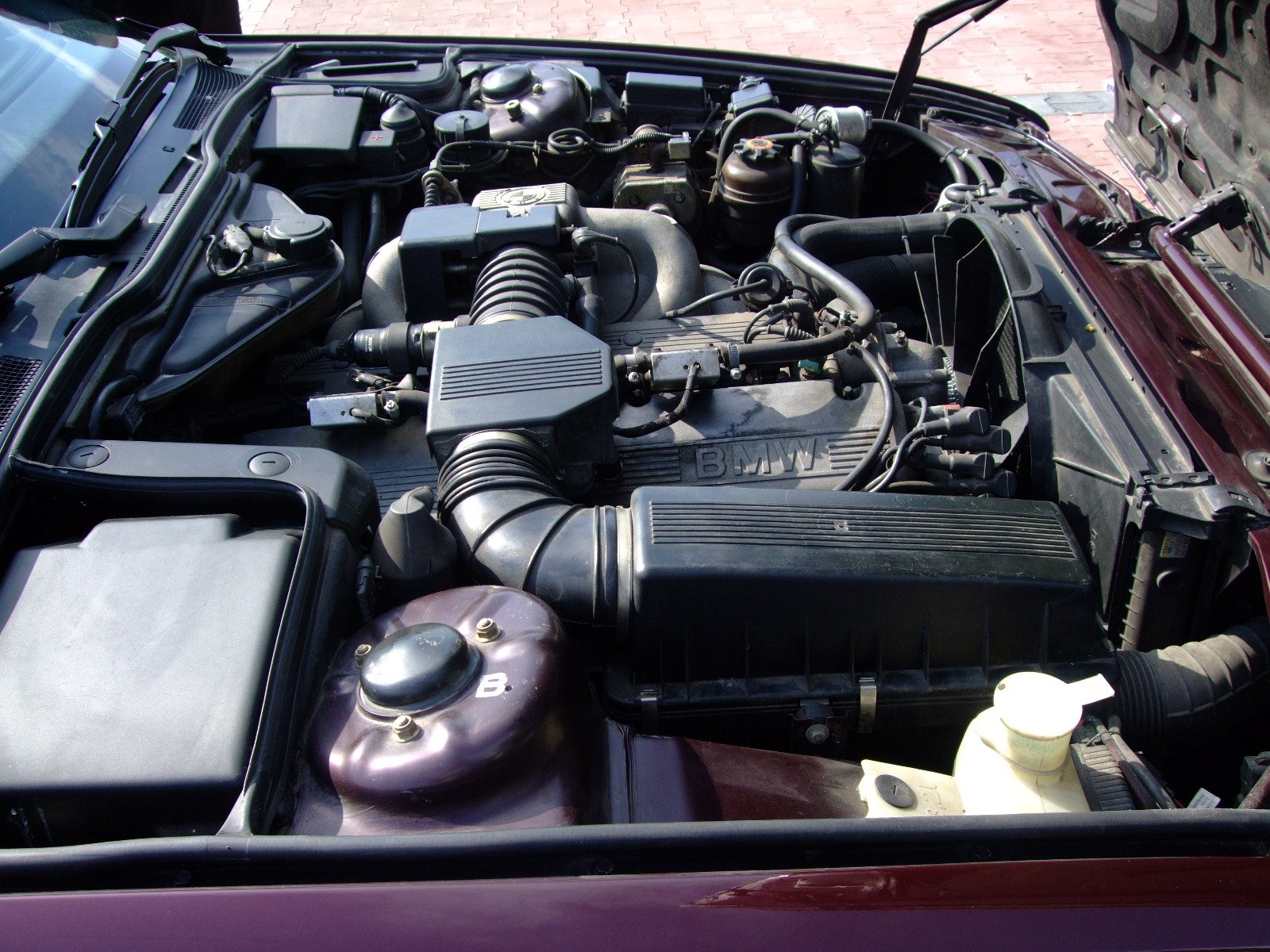

So the most powerful engine in the house could be ordered with the smallest kidney on offer; whoever ticked that box got a twelve-cylinder that evidently managed with the narrow opening. The link between kidney size and cooling demand has therefore been undone for forty years, not in theory but by an order option in BMW’s own range. The wide kidney was a status signal for those who wanted one, and something to go without for those who did not.
Two qualifications belong here so the finding holds. How many buyers chose that option, no checked source says, and the statement comes from a specialist publication rather than a BMW order catalogue. That changes little. A maker who releases the narrower opening for its strongest engine has undone the link itself, and anyone who justifies kidney size on engineering grounds today has to get past this car.
Bangle, the E65 and the dead heat nobody mentions
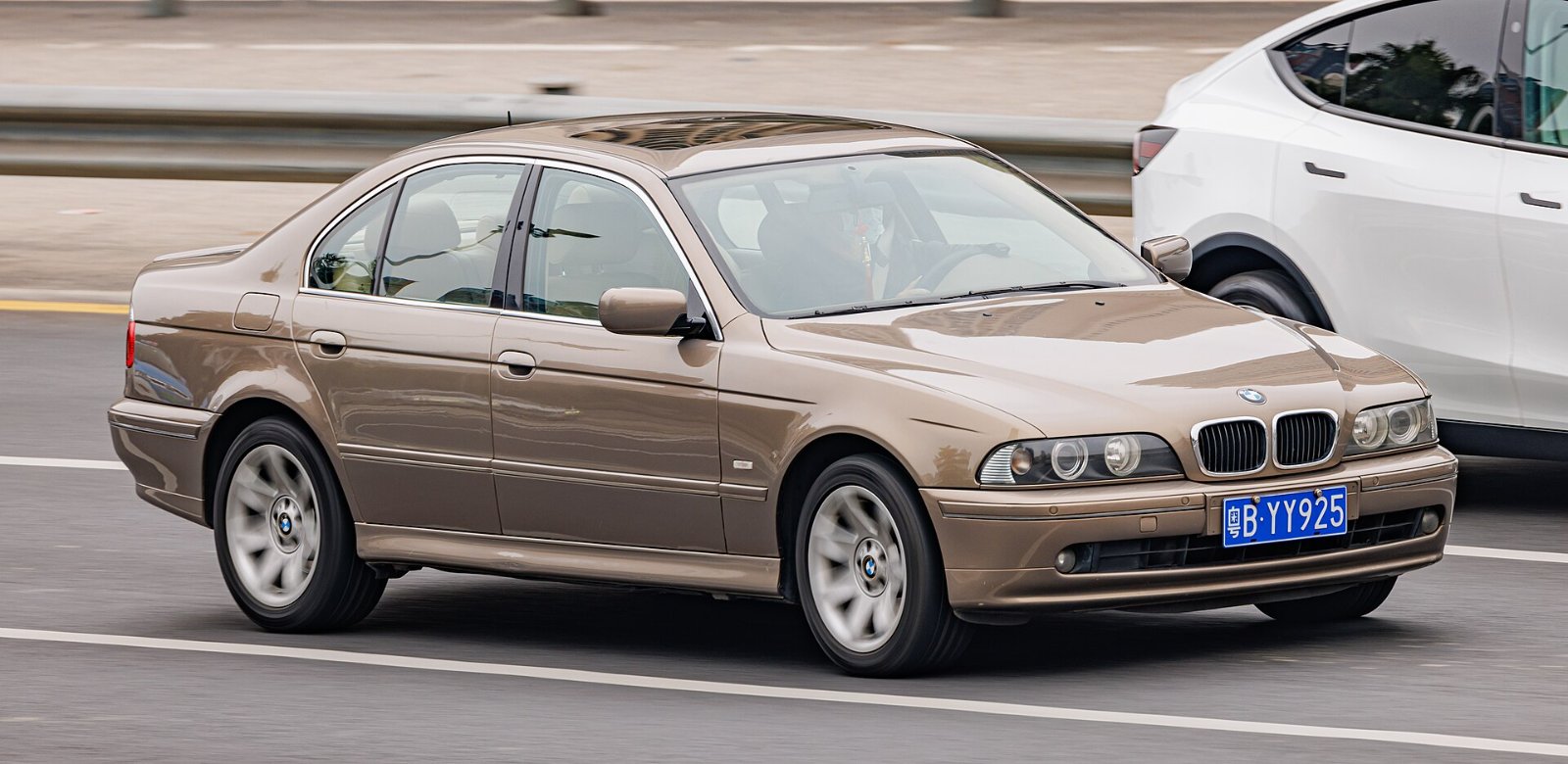
The most savaged 7 Series in company history sold almost exactly as well as its celebrated predecessor, and that figure appears in none of the retrospectives. Chris Bangle, born on 14 October 1956 in Ravenna, Ohio, joined BMW on 1 October 1992 and stayed until 3 February 2009. Adrian van Hooydonk drew the E65 in 1998, and Bangle carried it through as head of design.

What followed is well documented. The bootlid earned the nickname „Bangle Butt“, Time magazine put the car on its list of the fifty worst cars of all time, and several online petitions demanded Bangle’s dismissal. Reliable signature counts could not be found. Wikipedia reports that sales fell 60 per cent in 2002 and 2003 against 2001 — a figure without absolute numbers, calculated out of a model-change year.
At the end of the production run stands a result that makes the whole story look different. The E65 sold 343,073 cars over seven years; the E38, the predecessor everyone calls beautiful, sold 340,242 in seven years as well. The gap is 2,831 cars. That is under one per cent — so not a triumph of the panned design over the praised one, but a dead heat, and the uncomfortable part lies in that, because both camps were wrong about the effect.
What BMW did anyway is therefore worth noting. The 2005 facelift reworked the nose and tail and pulled back the bootlid, explicitly in answer to the criticism. BMW even offered existing customers conversion kits. In public the company showed firmness; in the workshop it gave way, and anyone placing today’s statements about kidney size should keep that pattern in mind.
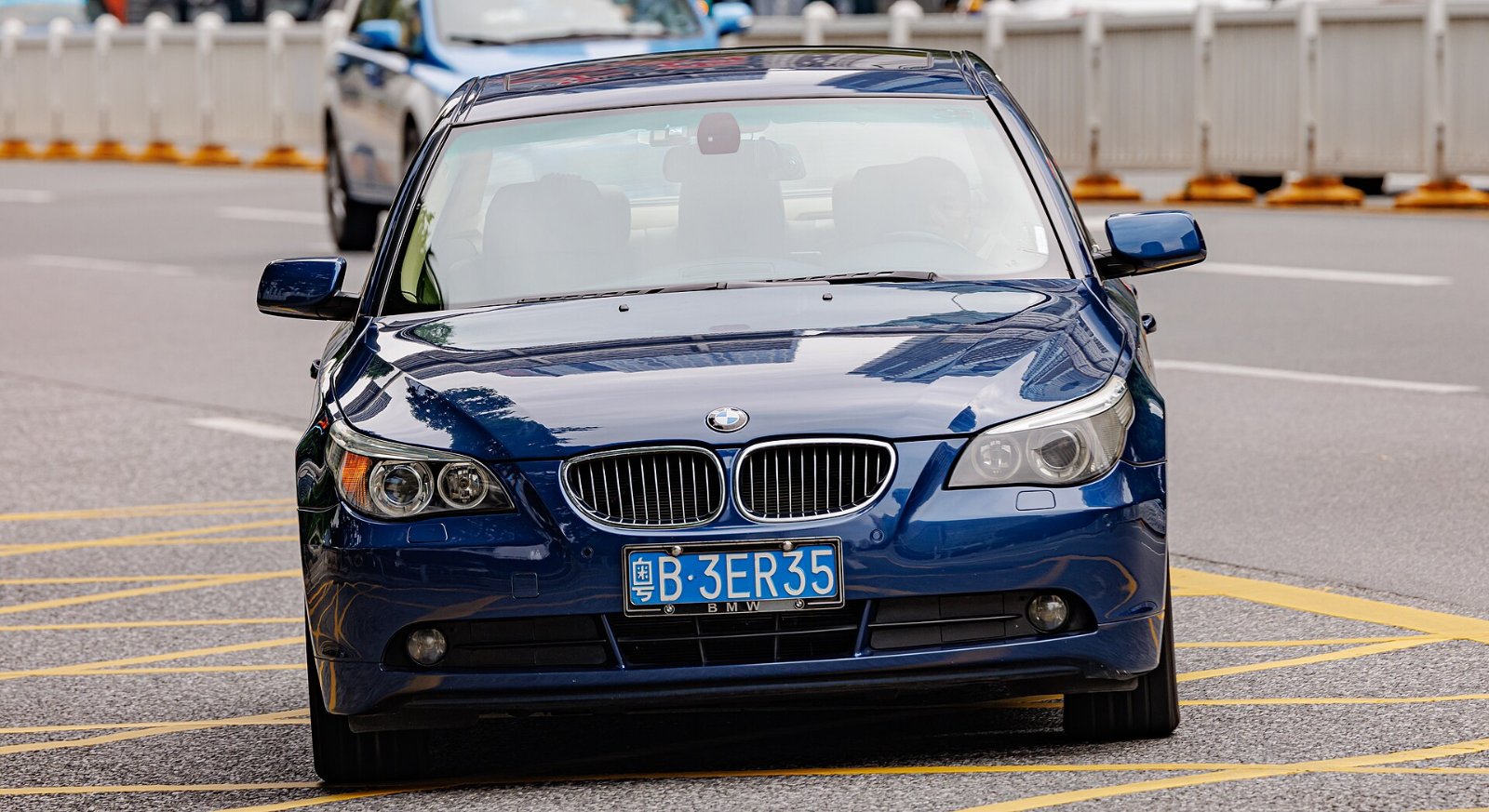
The E60 carries a story rarely told in arguments about shapes. Davide Arcangeli, a young designer from Bangle’s team, drew it, and he died of leukaemia shortly after the design was signed off. Bangle later described what that does: when a designer is lost at that stage, everyone on the team feels so bound to his memory that nobody wants to change anything. One of the most disputed BMW exteriors of the 2000s stayed untouched partly because the man who drew it could no longer defend it.

One more piece of personnel history belongs here. The man who drew the savaged E65 became Bangle’s successor in 2009 and has carried responsibility for the large kidneys ever since. Anyone panned in 2001 and running the department eight years later has an empirical argument for sitting criticism out.
What happened in 2019
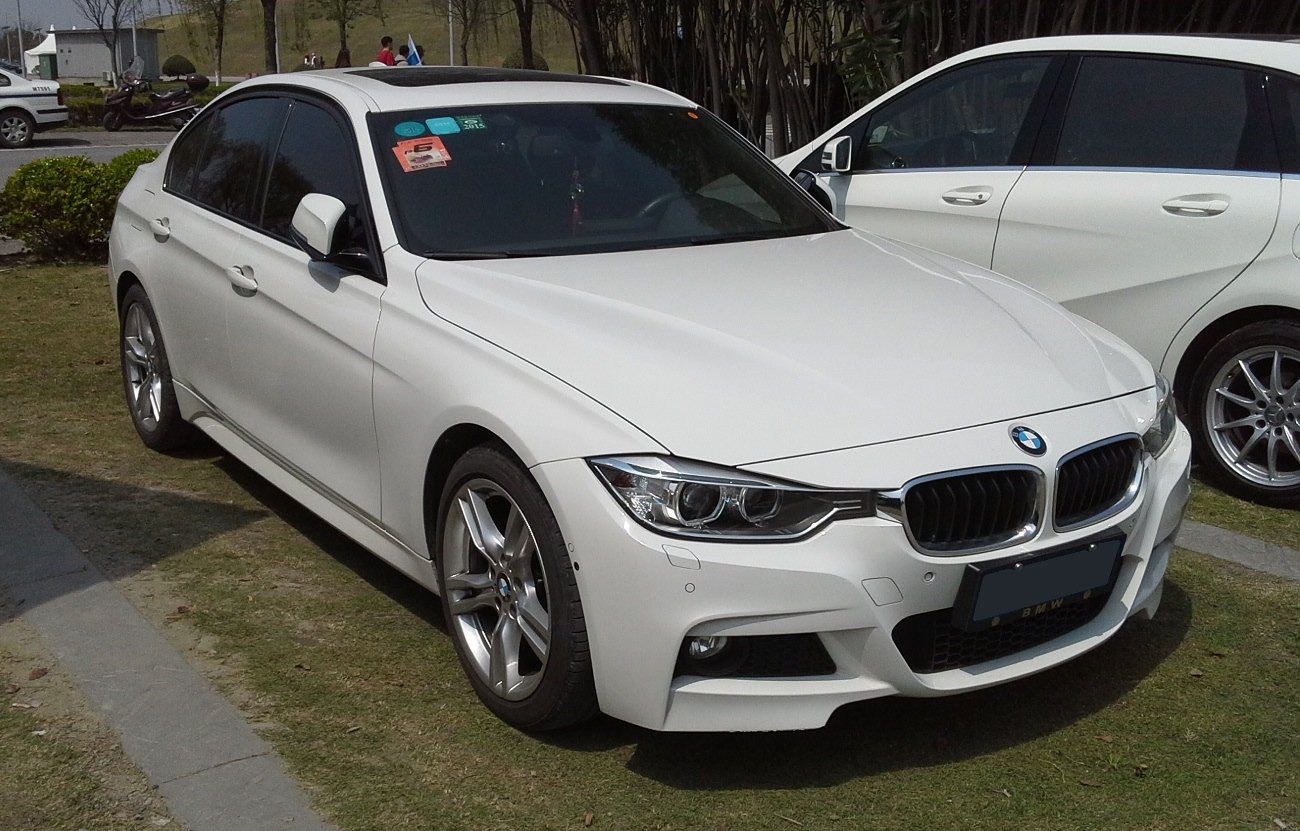
The growth of the kidney has no date, but it has a year in which everything came together. The starting point was the F30 of 2012, on which the lamps reached the kidney frame for the first time and formed a continuous visual unit with it; it achieved a drag coefficient of 0.26. Who drew it is disputed: bmwblog names Alexey Kehza, the designer overview Christopher Weil. From there it was a short step to a surface that could be enlarged without reordering the face.
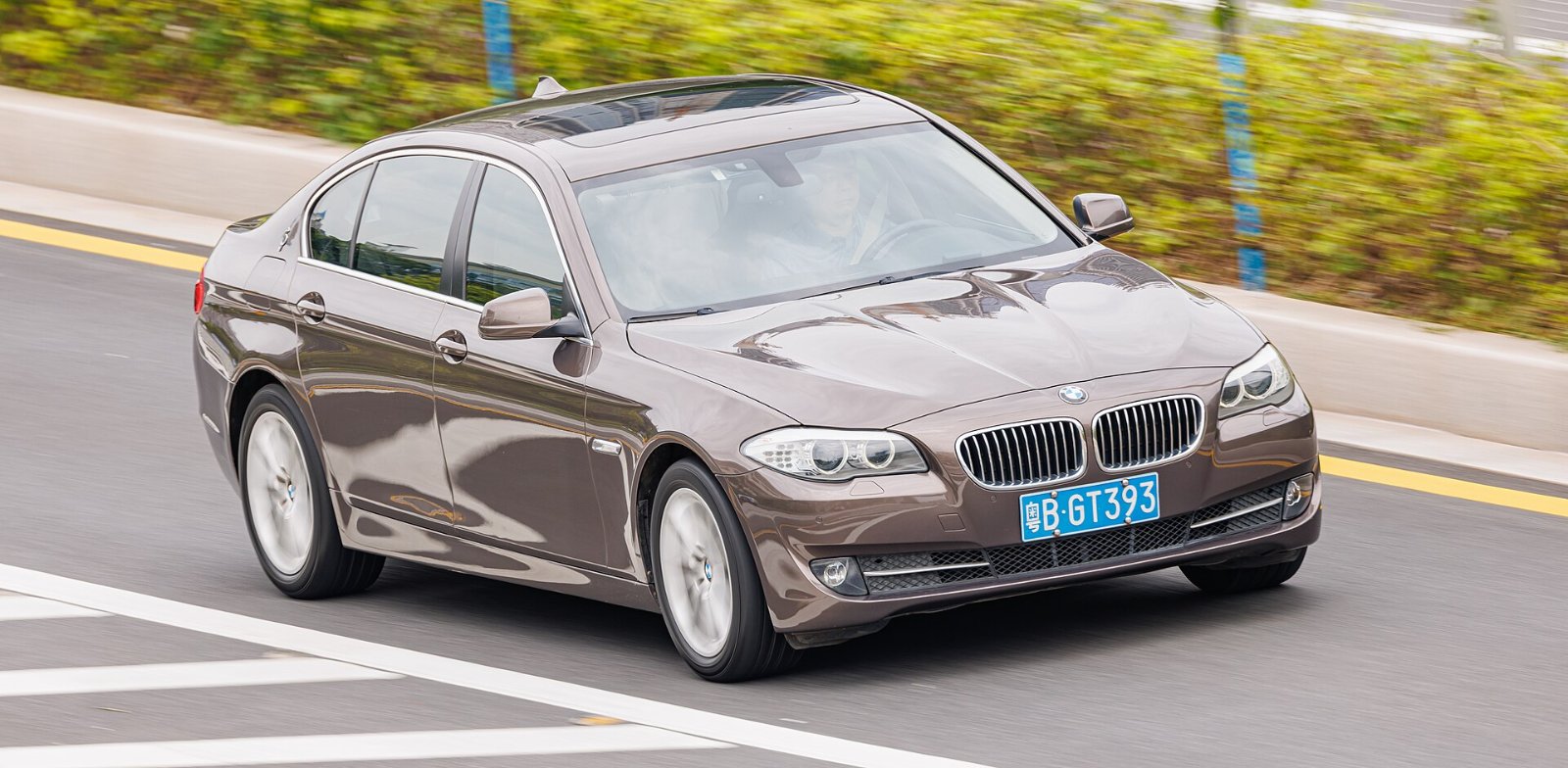
bmwblog dates the jump itself to the X5 of the G05 series, drawn by Anders Thøgersen. On it the two halves of the kidney were joined for the first time, and Motorsport-total calls the result the largest kidney to date in both directions. It carries fourteen vertical bars, the X6 twelve. On the X7, bmwblog could manage only the observation that the kidneys are plainly insane in their sheer size.


The best-quantified step concerns the 7 Series facelift of 16 January 2019; afterwards the grille was 40 per cent larger than its predecessor’s and the bonnet sat 5 centimetres higher. Those numbers come from autoevolution, which cites official BMW figures; they could not be found again in any BMW press kit. As the motive, the German Wikipedia article names the Chinese market, which took 41 per cent of 7 Series sales.

The larger format was followed by a turned one. Seungmo Lim drew both the concept and the production 4 Series G22, and that is not a guess but documented through the US design patent D939391. For the first time in decades a large upright kidney stood on a production BMW, rehearsed beforehand over seven years of show cars.
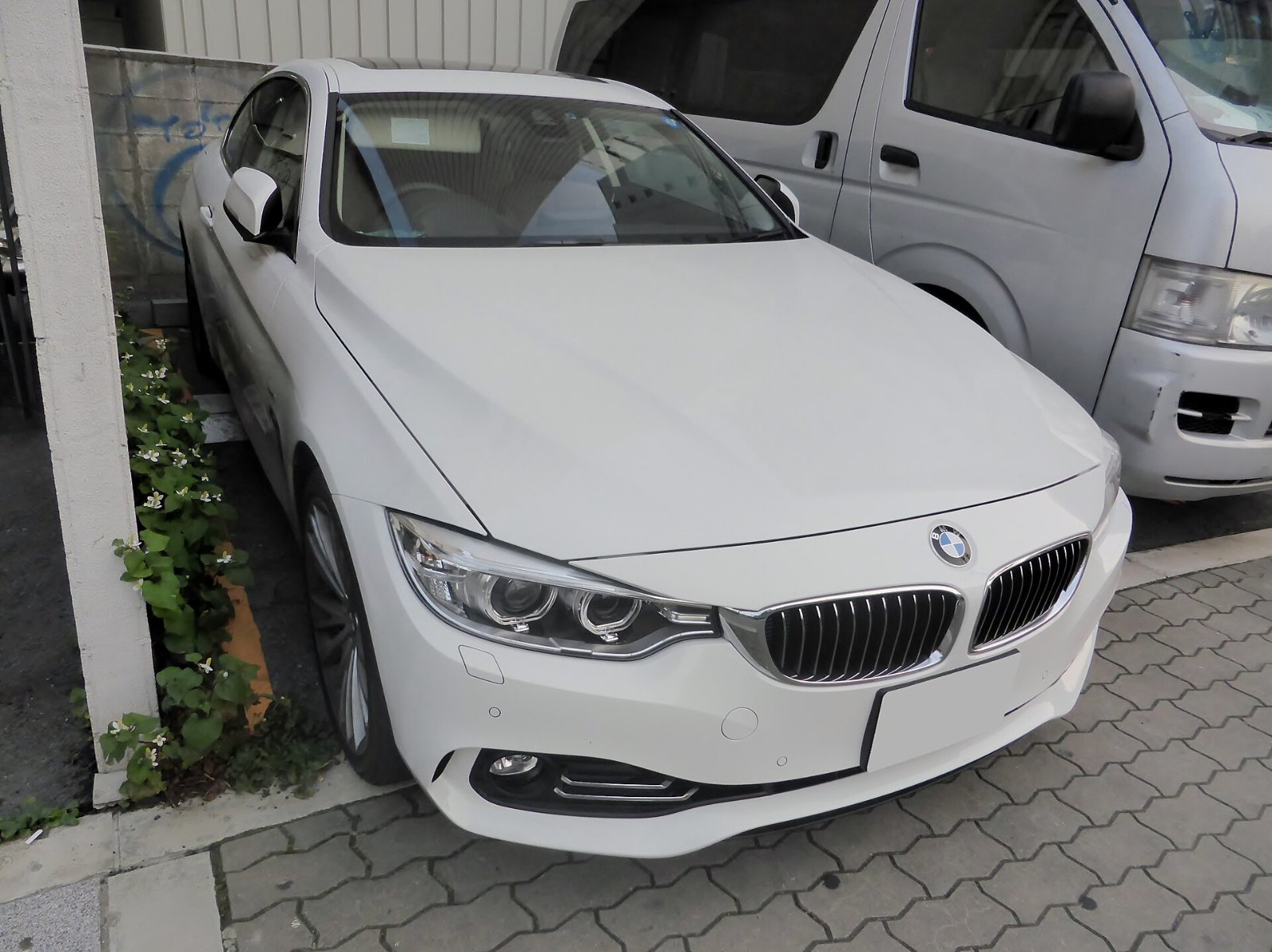

These two cars are where the packaging argument can be tested, and it does not hold; the G22 is 130 millimetres longer than the F32, 27 wider and 10 millimetres taller. One centimetre, then, measured over the whole car. The kidney grew by a multiple of that: Carscoops estimates that about four German number plates fit into the G22’s, and three into the X7’s. One centimetre of vehicle height does not produce a kidney that size.
How it came about is well documented, and the decision was not taken in the design studio. Sales director Ian Robertson and development director Klaus Fröhlich pushed the concept around 2017 and even considered putting the upright kidney on the 8 Series. That car was already too far along. Looking back, Robertson says the kidney put some buyers off and drew in more new ones — he would do it again.
One story that has settled around this car belongs marked as legend; the G22 quotes the 328, it is said, and Wikipedia names the 328 and the 3.0 CSi as models for it. The bmwblog report instead names the X models and the 3.0 CSL Hommage of 2015 as the trigger and expressly makes no connection to the 328. So the 328 line is not a documented brief to the designers. It was read in afterwards: pretty, but unsupported.


Two variants take the principle to its limit. On the M3 and M4 the kidney stands frameless and vertically stretched in the bodywork; since late 2024 the X3 of the G45 series has combined vertical and diagonally set bars, which had not been done before.
What sits inside the kidney today
Since 2013 there have been BMW kidneys with no air flowing through them, and since then the part has been graphics in the literal sense. Richard Kim drew a flat, wide twin kidney for the i3 — closed for aerodynamic reasons and edged in blue as a hint at the drivetrain. The i8 followed in 2014, the closed iX3 from 2018. None of these cars needs cooling air at the front any more.

That the shape has been set free shows in a detail usually lost in the size argument. On the X2 the kidney stands on its head. It is wider at the bottom than at the top, its long sides tilting up instead of down. An opening that really has to feed air to a radiator takes its shape from what sits behind it; one that can be turned upside down takes its shape from what it is meant to say.

On the combustion cars, movable louvres took over the work. Since the G30, BMW has fitted active air flap control to every 5 Series as standard: the system opens the louvres when more cooling air is needed and keeps them shut the rest of the time. The G30 reached a drag coefficient of 0.22 with it, ten per cent better than its predecessor.
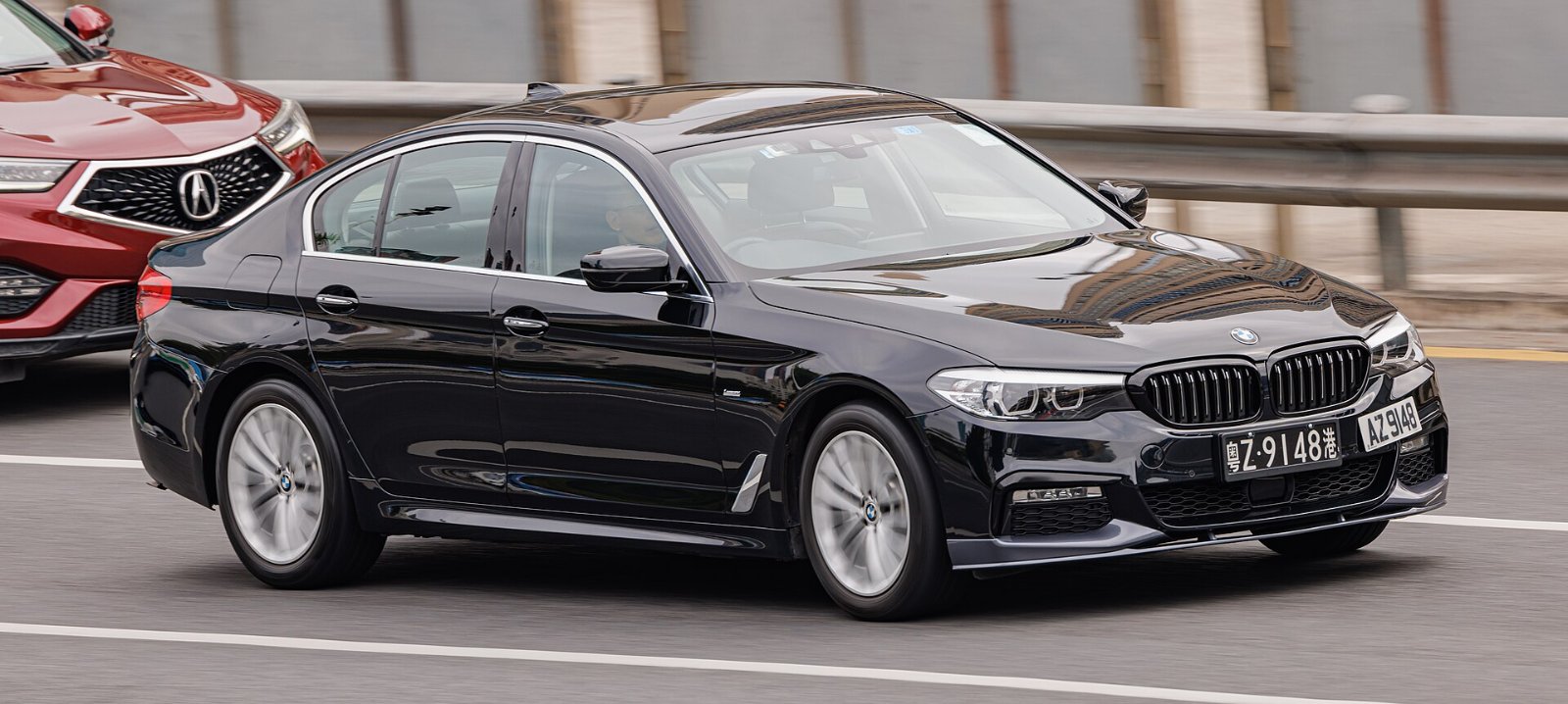
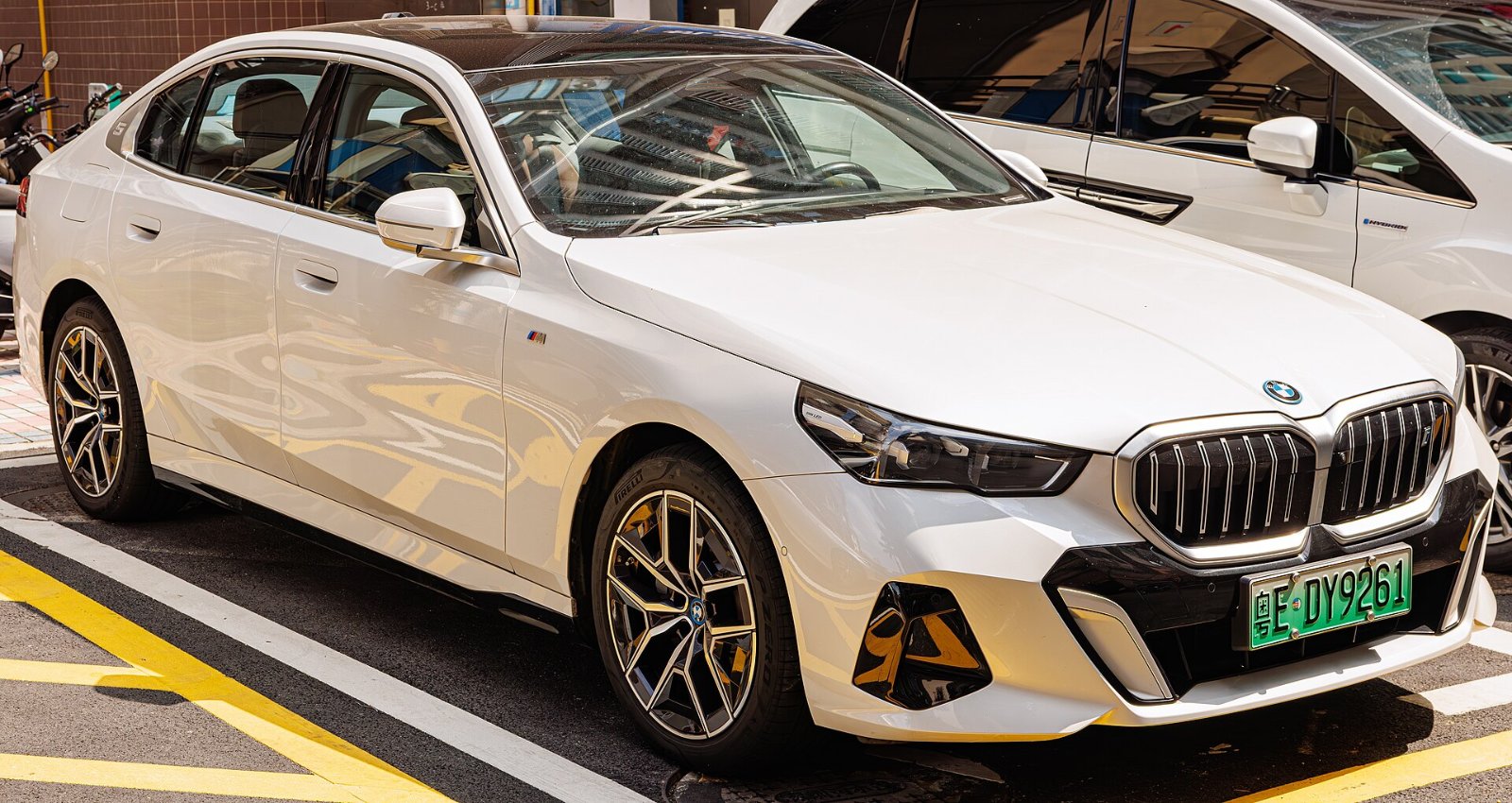
What such flaps deliver has been quantified in a paper on the production development, with Röchling Automotive as series supplier; the drag coefficient falls by around ten per cent and consumption in the EU cycle by around one per cent. On the 330i that is exactly 0.1 litres per 100 kilometres at 120 km/h, but 0.3 at 180. The system weighs around 1.1 kilograms and draws 4.2 watts at rest.
Drag only dominates at high speed, which is why the benefit at 180 km/h is three times the one at 120; anyone driving mostly in town will barely notice the closed kidney.
BMW described a kidney in most detail on the iX of 2021. Because the electric drivetrain needs hardly any cooling air at the front, the surface is fully closed and the press kit calls it an intelligence panel. Behind it sit camera equipment, radar and further sensors, along with heating elements that keep those sensors clear and an automatic cleaning system; the surface is expressly designed around the accuracy of the radar.

One detail from the same press kit made almost no reports: the polyurethane layer on this kidney heals itself. Smaller scratches disappear at room temperature within 24 hours, and in five minutes with warm air. In 2025 Adrian van Hooydonk described the black surface between the headlamps as both a visual bracket and a sensor carrier; on the sensors in the iX3 of the Neue Klasse, however, the press kit says nothing.
Does the sensor argument hold?
BMW’s main technical case for the large kidney holds exactly up to the point where the surface becomes a size. Two documented statements support it. auto motor und sport reports that the pierced kidney of the iNEXT study did not reach production for two reasons: it was no longer read as a BMW, and the space was needed for sensors. Domagoj Dukec puts it to Gulf News like this: „The kidney is not just an air-cooling system; it’s the strongest differentiator between us and our competitors.“
Measurements argue against the size justification. A study of production bumpers in the W band (76 to 81 gigahertz) found at most 1.25 decibels of attenuation one way through 4 millimetre samples, and under 2.5 for both ways. The same work sets out what that means in practice: 2.5 decibels cost 6.7 metres of range on a 50-metre system, and 33.5 on a 250-metre one. Radars with over 300 metres of range make it up with transmitter power.
What decides the matter are quantities that have nothing to do with the area of the grille. Thicker clear coat attenuates more, and metallic pigments raise the imaginary part of the permittivity; the rule of thumb for the radome is a material thickness of 2 millimetres at around 6 millimetres from the antenna, even and parallel. Metal reflects completely.
A radar behind a plastic surface loses under 2.5 decibels. The critical quantities are thickness, parallelism and paint — not the area of the grille; a large kidney brings the radar no technical advantage.
The same sensors have to be accommodated everywhere. On the EQS, Mercedes-Benz puts a black panel where the grille used to be, keeps the radiator shutter largely closed and seals the front end throughout. The result is a drag coefficient of 0.20. Tesla does without a grille altogether and replaced the black oval on the Model S with a painted surface.
Ford takes the same route on the Mustang Mach-E and justifies it with the customer. Chief designer Gordon Platto: „Our customers don’t want to drive a science project; they want a beautiful looking vehicle that represents the brand properly.“ At General Motors the Hummer EV replaces the seven slots with six blocks carrying the letters of the name, behind which sits storage rather than cooling. Design director Rich Scheer calls that „design theater“. Hyundai, Kia and Volvo close off the former openings on the Kona, Niro and XC40 as a visible sign of the new drivetrain.
The third check comes from BMW itself. The iX3 of the Neue Klasse carries a markedly smaller kidney than the 7 Series, X7 or XM and reaches a drag coefficient of 0.24 with the full assistance package. If the sensors forced the size, the newest and most highly automated model of all would have to wear the largest kidney of all. It wears the smallest in years.
That leaves one driver of tall front ends the kidney debate almost never names, although it is binding. Regulation (EC) No 78/2009 of 14 January 2009 governs the type-approval of motor vehicles with regard to the protection of pedestrians. TÜV Thüringen summarises the core points: frontal protection systems may project no more than 50 millimetres beyond the leading edge of the bonnet and must give way on impact.
This legal question cannot be pushed as far as it often is, and I am not a lawyer. The regulation prescribes impact values, not a bonnet height, and the link between pedestrian protection and rising front ends is nowhere quantified in the checked sources. That taller bonnets offer more crush distance is a common explanation in the field; evidence for it was not found. The figures come from the blog of a testing organisation, not from the text of the regulation.
The criticism, and two positions in the same house
The cleverest objection to the large kidneys comes from a writer who shrank them as an experiment and then had to admit it made nothing better. On 24 September 2020 Raphael Orlove took the kidneys off an M3 and M4 at Jalopnik and concluded that the result looked no better at all. His suspicion lies elsewhere: „The headlights are the problem. Why are they so angry?“ He describes the lamps as angry, grim and defiant.
BimmerToday argues along the same lines, only with a designer’s toolkit: the real task was never the size of the kidney but its relationship to the headlamps and the surfaces around it. That is criticism from the craft.
Domagoj Dukec, Head of BMW Design, has taken the opposite position more than once: the aim is not to please everyone, and if 20 per cent of people like something, that fits BMW’s own customers. BimmerToday has unpicked the logic. Around 70 per cent of BMW buyers want discreet status cars and 30 per cent expressive ones, so over 20 per cent approval for such a polarising element counts as a success.
On how to handle the criticism, the house then parts ways. Dukec to Autocar:
In the design business, you can’t listen to social media reactions.
Domagoj Dukec, Head of BMW Design, to Autocar [S57]
Adrian van Hooydonk, his superior as Senior Vice President BMW Group Design, said the opposite on Top Gear on 25 May 2023:
We don’t ignore the chatter. We hear it. We see it.
Adrian van Hooydonk, Senior Vice President BMW Group Design, Top Gear, 25 May 2023 [S78]
Both sentences come from the same company and the same argument, and both are meant seriously. On the size itself, van Hooydonk said the line that describes the matter most honestly: you shape the grille according to the proportions of the whole car, or according to the expression you want to give it. Cooling and sensors do not appear in that. Peter Henrich from product management calls the feedback very positive in auto motor und sport: this is what customers who want to express something are asking for.
Once this tone slipped, and the company corrected it. To design criticism of the iX front, BMW replied with the tweet „OK, Boomer. And what’s you reason not to change?“ The apology followed on 18 November 2020: „No matter what age you are, we hear you. We are sorry, it wasn’t our intention to insult anyone with meme slang.“

The evidence is mixed, and sharpening it overstates the case. In the United States BMW sold exactly 18,621 4 Series in 2019, the last full F32 year, but 22,937 in 2021, the first full G22 year, and 41,571 in 2022 — just short of the F32 peak of 46,079. Only, that run covers several body styles in a changing mix, and parts were short in 2020 and 2021. The figures show that sales did not collapse. They do not show that the kidney helped them.
With the XM it looks different, and here too one should be careful about cause. Exactly 7,813 cars went out worldwide in 2024; within the brand’s range that was last place, while the Z4 roadster managed 10,482. The XM is expensive, a plug-in hybrid and a niche model, so the figures document a failure but not its cause. Reliable group figures could not be obtained, which is why the popular line about record sales does not appear here at all.
What trade mark law says about the kidney
I am not a lawyer. Everything in this chapter reproduces legal sources and specialist commentary with references, it is not legal advice, and anyone who wants to rely on it should read the case numbers named here in the original.
The word „Niere“ belongs to BMW, at least in a vehicle context and at least as applied for. On 6 October 2014 the company registered it in Germany as a word mark, register number 3020140068907, Nice class 12. The purpose, according to specialist commentary: to bar others from the word in this context. The office had to examine whether such a sign can be protected at all. How the proceedings ended could not be established.
BMW has held figurative marks on kidney depictions for longer, among them international registrations 512359 and 512360 from the 1980s, extended to Switzerland. Classes, scope and current validity could not be clarified.
The most rewarding case in law is a decision of the Federal Patent Court in Munich. In case 28 W (pat) 504/16 the court ruled on 17 July 2019 on a three-dimensional mark applied for in 2015, showing a sports car with two features: the BMW kidney and the so-called black belt, a dark band running from the bonnet to the tail. The court held the kidney to be a distinctive element on account of its long-standing recognition in the market, and found no need to keep it free for competitors.
The outcome is worth a note, because it has never featured in the size debate. The decision of the lower instance was set aside, and the sign was therefore registrable both for whole vehicles and for vehicle parts. So in 2019 a German court found that the kidney is distinctive in itself. That is the strongest argument that it works as a trade mark — and it is precisely the one BMW has never used in public.
BMW has also enforced its marks around the kidney, though by a detour. In case 4 HK O 11014/17 a court ruled on 5 March 2018 on sticker sets that a dealer sold expressly for the BMW radiator grille. BMW won; it ended with an injunction and around 4,000 euros in costs. The case was won on the M colour mark, not on a shape mark for the kidney. In the United States BMW filed a suit against alleged counterfeiters in October 2019; the court and the outcome sit behind a paywall.
How a grille becomes a trade mark is shown by a competitor, for comparison. On 7 April 2025 the First Board of Appeal of the EUIPO ruled in case R 2316/2024-1 on the Mercedes radiator grille and held it sufficiently distinctive. What counted was the overall composition of mesh, circular element and centre bar — and what the observer actually perceives. The decision makes no reference to the BMW kidney.
Four questions remain open. Whether the kidney alone — without the black belt and without a vehicle around it — is registered as a shape mark in its own right could not be established. The status of the word mark is unclear, EU-wide design registrations could not be found, and whether BMW acts systematically against copied kidneys cannot be inferred from a single colour-mark case.
A second legal question concerns light. Illuminated contours and logos were long inadmissible in Europe, until UN-ECE regulations R48 and R148 were amended on 4 January 2023. Since then illuminated logos of up to 100 square centimetres are allowed, no more than 7.5 centimetres from the nearest lit surface. Retrofitting without type approval remains inadmissible. Whether BMW’s Iconic Glow falls under this could not be clarified.
What comes next
The return to the small kidney has a reason BMW has never put in the foreground, and it sits in a subordinate clause about components. On 3 November 2021 Adrian van Hooydonk told Car Design News that today’s grille contains 20 parts, and that anyone thinking about the future arrives at really cutting the part count. Twenty parts for a surface no cooling air flows through. That is an accountant’s calculation, not a matter of taste.
You can see it on the iX3 of the Neue Klasse, which BMW presented on 5 September 2025. The car measures 4,782 millimetres long and weighs up to 2,360 kilograms. Its kidney stands upright, refers by BMW’s own account to the Neue Klasse of the 1960s, and turns out small; bmwblog remarked drily that there are no gigantic kidneys here. The chrome has gone, and a light signature has taken its place.
The technical data show that the smaller surface cost nothing. The iX3 reaches a drag coefficient of 0.24 against 0.29 for its predecessor, travels up to 805 kilometres on the WLTP cycle and charges at up to 400 kilowatts on an 800-volt architecture. Oliver Zipse calls the car „more BMW than ever“. On the sensors behind the kidney the press kit is silent, which stands out on a car of this generation.
How close the decisions are, van Hooydonk described himself in 2025. For the new i3, BMW tried the upright iX3 kidney and dropped it again because it would have looked too much like the past; it was tested on the 3 Series too. The same management that defended the upright kidney in 2020 as a statement of brand identity dropped it five years later on the grounds that it looked retro.
For ninety years this part has outlived every explanation given to it. It was aerodynamic, then a matter of cooling, then packaging, then a badge, then a sensor carrier, and in none of those roles would it stay put: the shape remained, the reasons changed. What remains is the question from the beginning. Who drew it in 1933? Until somebody goes into the company archive in Munich and looks up what actually sat behind the mask of the 303, the best-known face in German motoring stays a work without an author. Perhaps someone reading this has already been there.
Further reading
These pieces are currently published in German only; the titles are given as they appear on the site.
- Die BMW-Designabteilung — who decided what, and when, from Hofmeister to van Hooydonk.
- Claus Luthe — fourteen years of BMW design and the flattest kidneys of the post-war period.
- Ercole Spada und der E32 — how the car came about whose order form answers the kidney question.
- Der Zwölfzylinder im E32 — what was actually working behind the wide kidney.
- Kaufberatung BMW E32 — what to look at if you are going to see a 730i or a 750i.
- BMW Turbo, 1972 — the study the shark nose came out of.
- Giovanni Michelotti — the man behind the BMW 700, the car without a kidney.
- Der 5er, den es hier nie gab — 950,000 cars and an entirely different face.
- Scheinwerfer und Vorschriften — the other component the legislator helps to draw.
- Autologos von BMW, Audi, Porsche, Mercedes und VW — and why the propeller is not one.
- Warum Autos schwerer wurden — from the W 120 at 1,150 kg to the W 214 at 2,390 — and why kilos per horsepower fell anyway.
Sources
All online sources retrieved on 10 September 2026. The reference codes match the citations in the timeline. Manufacturer, workshop and community sources are marked as such in the text. BMW PressClub and BMW Group Classic are cited as text sources; no images from them have been used. Source titles are left in the language they were published in.
- S01 · „A FACE IN THE CROWD. THE BMW 303.“ BMW Group Classic / PressTopic (BMW Group). www.presstopic.bmwgroup.com
- S02 · „DAS GESICHT IN DER MASSE. BMW 303.“ BMW Group Classic / PressTopic (BMW Group). www.presstopic.bmwgroup.com
- S03 · „BMW 303.“ DeWiki (Spiegelung der deutschen Wikipedia). dewiki.de
- S04 · „BMW 303.“ Wikipedia (englisch). en.wikipedia.org
- S05 · „BMW-Niere.“ Wikipedia (deutsch). de.wikipedia.org
- S06 · „BMW-Niere.“ DeWiki (Spiegelung, mit Mönnich-Zitat und Fußnotenapparat). dewiki.de
- S07 · „Gebrüder Ihle Bruchsal.“ Wikipedia (deutsch). de.wikipedia.org
- S08 · „Ihle and the origins of BMW’s signature grille.“ PreWarCar. www.prewarcar.com
- S09 · „The mysterious origins of BMW’s ‚kidney‘ grille.“ Drive (Australien). www.drive.com.au
- S10 · „Fritz Fiedler.“ Wikipedia (englisch). en.wikipedia.org
- S11 · „BMW 3/20.“ Wikipedia (englisch). en.wikipedia.org
- S12 · „Josef Ganz.“ Wikipedia (englisch). en.wikipedia.org
- S13 · „BMW’s Designers.“ BMWism. bmwism.com
- S14 · „This Is What the BMW Logo Really Means. And No, It’s Not an Airplane Propeller.“ The Drive (mit Zitaten von Fred Jakobs, BMW Group Classic). www.thedrive.com
- S15 · „A BMW Design Icon Through the Ages.“ BMW M Magazin (BMW AG). www.bmw-m.com
- S16 · „The BMW kidney grille: A visual history of the hallmark design motif.“ BMWBLOG, 16. März 2021. www.bmwblog.com
- S17 · „Die Entwicklung der BMW-Niere von 1933 bis heute.“ Motorsport-Total.com. www.motorsport-total.com
- S18 · „Perfekt gegrillt: Der lange Weg zu aktuellen BMW-Nieren in XXL.“ BimmerToday, 10. April 2024. www.bimmertoday.de
- S19 · „Evolution Of The Kidney Grille.“ BimmerLife, 13. April 2019. bimmerlife.com
- S20 · „BMW kidney grilles – designs of the past and present.“ Paul Tan’s Automotive News, 9. März 2021. paultan.org
- S21 · „BMW 328.“ Wikipedia (englisch). en.wikipedia.org
- S22 · „BMW 501.“ Wikipedia (englisch). en.wikipedia.org
- S23 · „BMW 507.“ Wikipedia (englisch). en.wikipedia.org
- S24 · „This Is Every BMW That Was Sold Without Kidney Grilles.“ Jalopnik. www.jalopnik.com
- S25 · „The BMW 700 – the car that saved the company.“ BMW Group PressClub, Meldung T0022634EN. www.press.bmwgroup.com
- S26 · „60 Jahre BMW 1500 (Neue Klasse): Comeback einer großen Marke.“ Motor1 Deutschland. de.motor1.com
- S27 · „Wilhelm Hofmeister (Designer).“ Wikipedia (deutsch). de.wikipedia.org
- S28 · „BMW 3200 CS.“ Wikipedia (englisch). en.wikipedia.org
- S29 · „BMW New Six.“ Wikipedia (englisch). en.wikipedia.org
- S30 · „BMW E9.“ Wikipedia (englisch). en.wikipedia.org
- S31 · „BMW Turbo.“ Wikipedia (englisch). en.wikipedia.org
- S32 · „BMW 5 Series (E12).“ Wikipedia (englisch). en.wikipedia.org
- S33 · „BMW 6 Series (E24).“ Wikipedia (englisch). en.wikipedia.org
- S34 · „BMW 6er-Reihe: Jubiläum für die Haifischnase.“ amz.de. www.amz.de
- S35 · „BMW 3 Series (E21).“ Wikipedia (englisch). en.wikipedia.org
- S36 · „BMW M1.“ Wikipedia (englisch). en.wikipedia.org
- S37 · „BMW 3 Series (E30).“ Wikipedia (englisch). en.wikipedia.org
- S38 · „BMW E30: The Design Story Behind an Automotive Classic.“ BMWBLOG, 26. Januar 2025. www.bmwblog.com
- S39 · „BMW 7 Series (E32).“ Wikipedia (englisch). en.wikipedia.org
- S40 · „Curbside Classic: 1989 BMW 735iL (E32) – Bavaria Builds A True Flagship.“ Curbside Classic. www.curbsideclassic.com
- S41 · „BMW 3 Series (E36).“ Wikipedia (englisch). en.wikipedia.org
- S42 · „The BMW 3 Series: A Kidney-Shaped History.“ Jalopnik. www.jalopnik.com
- S43 · „BMW 7 Series (E38).“ Wikipedia (englisch). en.wikipedia.org
- S44 · „BMW 7 Series (E65).“ Wikipedia (englisch). en.wikipedia.org
- S45 · „Design Icons: A Look Back at the E65 BMW 7 Series.“ Form Trends. www.formtrends.com
- S46 · „Chris Bangle.“ Wikipedia (englisch). en.wikipedia.org
- S47 · „Chris Bangle Reveals the Truth of the E60 5 Series Design.“ BMWBLOG, 26. September 2020. www.bmwblog.com
- S48 · „Heroes and Villains: BMW Design (Part One).“ Driven to Write, 3. Mai 2021. driventowrite.com
- S49 · „BMW 3 Series (G20).“ Wikipedia (englisch). en.wikipedia.org
- S50 · „BMW 5 Series (G30).“ Wikipedia (englisch). en.wikipedia.org
- S51 · „The new BMW 5 Series Sedan. Contents.“ Pressemappe, BMW Group PressClub, Anhang T0265143EN. www.press.bmwgroup.com
- S52 · „BMW X5 (G05).“ Wikipedia (englisch). en.wikipedia.org
- S53 · Oagana, Alex: „Official: 2020 BMW 7 Series Has More Tech, More Power and More Grille.“ autoevolution, 16. Januar 2019. www.autoevolution.com
- S54 · „BMW 4 Series (G22).“ Wikipedia (englisch). en.wikipedia.org
- S55 · „How Does The 2021 BMW 4-Series Coupe Compare To Its Predecessor?“ Carscoops, Juni 2020. www.carscoops.com
- S56 · „The Story Behind the 4 Series‘ Large Kidney Grille.“ BMWBLOG, 17. Januar 2025. www.bmwblog.com
- S57 · „BMW design chief: New 4 Series grille will be ‚brand-shaper‘.“ Autocar. www.autocar.co.uk
- S58 · US-Designpatent D939391 S, „Radiator grille for a vehicle“, Anmelder Bayerische Motoren Werke AG, Erfinder Seungmo Lim. Justia Patents. patents.justia.com
- S59 · US-Designpatent USD853897S1, „Radiator grille for a vehicle“, Anmelder Bayerische Motoren Werke AG, Erfinder Calvin Luk. Google Patents. patents.google.com
- S60 · US-Designpatent D1042254 S, „Radiator grille for a vehicle“, Anmelder Bayerische Motoren Werke AG, Erfinder Marcus Syring und Jose Alberto Casas Pena. Justia Patents. patents.justia.com
- S61 · „BMW XM.“ Wikipedia (englisch). en.wikipedia.org
- S62 · „Extravagant statement: the design of the BMW XM.“ BMW M Magazin (BMW AG). www.bmw-m.com
- S63 · „The XM Is Dead Last In BMW Global Sales.“ Motor1. www.motor1.com
- S64 · „The start of a new era: the new BMW iX3.“ BMW Group PressClub, Meldung T0451998EN, 5. September 2025. www.press.bmwgroup.com
- S65 · „BMW iX3 Debuts as the First Neue Klasse SUV.“ BMWBLOG, 5. September 2025. www.bmwblog.com
- S66 · „BMW reinvents itself: The BMW Vision Neue Klasse.“ BMW Group PressClub, Meldung T0431558EN, 2. September 2023. www.press.bmwgroup.com
- S67 · „The new BMW X3.“ BMW Group PressClub, Meldung T0442377EN. www.press.bmwgroup.com
- S68 · „The New BMW iX Design.“ BMW Group PressClub USA, Meldung T0320510EN_US. www.press.bmwgroup.com
- S69 · „Klappe zu – CO2 runter.“ AutomobilKONSTRUKTION (Konradin). automobilkonstruktion.industrie.de
- S70 · „How the Active Kidney Grille in 2018 BMW 7 Series Works.“ Pacific BMW. www.pacificbmw.com
- S71 · „The EQS: Aerodynamics.“ Mercedes-Benz Media (Mercedes-Benz Kanada). media.mercedes-benz.ca
- S72 · „Design of a radome.“ RADAR-BLOG, InnoSenT GmbH. radar-blog.innosent.de
- S73 · „Car Bumper Effects in ADAS Sensors at Automotive Radar Frequencies.“ Sensors 23(19):8113, PubMed Central PMC10575454. pmc.ncbi.nlm.nih.gov
- S74 · „Schutz fürs Auto oder Gefahr für Fußgänger? In der EU geht Fußgängerschutz vor Design.“ TÜV Thüringen. tuev-thueringen.de
- S75 · „Leuchtendes Autologo nachrüsten – ist das legal?“ t-online, Mobilität. www.t-online.de
- S76 · „How electric vehicle designers are reimagining iconic grilles.“ Gulf News. gulfnews.com
- S77 · „Interview: Adrian van Hooydonk, BMW Group director of design.“ Car Design News, 3. November 2021. www.cardesignnews.com
- S78 · „Future BMW designs will be ‚cleaner‘, says design boss.“ Top Gear, 25. Mai 2023. www.topgear.com
- S79 · „BMW Runs Pro-Big-Grille Advertorial, Yet Says It Doesn’t Care What Everyone Thinks.“ Carscoops, 6. Februar 2021 (referiert Werbebeiträge in Top Gear und Esquire). www.carscoops.com
- S80 · „Design-Chef Dukec: 20 Prozent gefällt die große BMW 4er-Niere.“ BimmerToday, 4. Februar 2021. www.bimmertoday.de
- S81 · „BMW verteidigt Design: Riesen-Niere ist ein riesen Ding.“ auto motor und sport (mit Zitaten von Peter Henrich). www.auto-motor-und-sport.de
- S82 · „BMW Head of Design Talks About Large Kidney Grilles and Electric Pickup Trucks.“ BMWBLOG, 28. Mai 2023. www.bmwblog.com
- S83 · „Drawing fire: We talk to BMW’s Design Director.“ Automotive Daily, 24. Oktober 2021. www.autodaily.com.au
- S84 · „BMW Design head Domagoj Dukec faces his toughest critic.“ Paul Tan’s Automotive News, 20. Mai 2021. paultan.org
- S85 · Orlove, Raphael: „The Grille Isn’t The Problem.“ Jalopnik, 24. September 2020. www.jalopnik.com
- S86 · „BMW reagiert offensiv auf mehr Elektroauto-Spott – und entschuldigt sich.“ teslamag.de, November 2020. teslamag.de
- S87 · „BMW 4-Series Sales Figures.“ CarFigures (US-Markt). carfigures.com
- S88 · „The BMW i3 Almost Got The iX3’s Vertical Kidney Grille.“ Motor1. www.motor1.com
- S89 · „Markenbeschwerdeverfahren – ‚Sportwagen mit BMW-Niere und Black Belt (3d-Marke)‘.“ Bundespatentgericht, 28 W (pat) 504/16, Beschluss vom 17. Juli 2019, referiert bei Lexika.de. www.lexika.de
- S90 · „BMW: Jetzt geht’s markenrechtlich an die Nieren!“ Steiger Legal, 14. Oktober 2014. steigerlegal.ch
- S91 · „BMW-Niere.“ Beitragsübersicht, markenrecht24.de (Beitrag „Flying Gürtel“, 11. Oktober 2019). www.markenrecht24.de
- S92 · „Verletzung der Farbmarke von BMW.“ IT-Recht Kanzlei (zu 4 HK O 11014/17, Entscheidung vom 5. März 2018). www.it-recht-kanzlei.de
- S93 · „EUIPO: Mercedes Kühlergrill als Marke schutzfähig.“ KPW Law (zu EUIPO-Beschwerdekammer R 2316/2024-1 vom 7. April 2025). kpw.law
- S94 · „BMW targets counterfeit car part makers in trademark suit.“ World IP Review, 11. Oktober 2019 (nur Anriss frei zugänglich). worldipreview.com
- S95 · „Claus Luthe – eine Hommage.“ Initiative Kulturgut Mobilität. kulturgut-mobilitaet.de
- S96 · „Category:BMW kidney grilles.“ Wikimedia Commons (Abruf gesperrt, nur über Suchindex nachgewiesen; Beispieldatei „File:BMW M4 (G82) kidney grilles.jpg“). commons.wikimedia.org
- S97 · „BMW 303 Limousine, erstmals mit BMW Niere, 1933.“ BMW Group PressClub Österreich, Bild-ID P0034896 (Bildnutzung nicht gestattet, nur als Existenz- und Datierungsbeleg geführt). www.press.bmwgroup.com
- S98 · „BMW Planning Different Kidney Grille Designs Without Chrome.“ BMWBLOG, 18. Januar 2025. www.bmwblog.com
Postscript: the kidney is the dirtiest part on the car
A practical footnote that appears in none of the sources checked, because it comes out of the workshop: the kidney sits exactly where a car gets dirty first, and depending on the year it is made of three entirely different materials that want three entirely different treatments. Chromed frames from the sixties and seventies take a chrome polish and then a wax that closes the pores — without that film, salt settles in the fine cracks and the rust starts working from behind. On the gloss-black kidneys of the last ten years the opposite applies: that is painted plastic, and any polish with an abrasive in it leaves scratches you will see later in raking light. There, only a soft cloth, plenty of water and patience will do. And anyone who leaves insect remains sitting on a kidney will have etch marks in the clear coat a few weeks later that no polish will lift. That is experience, not a citation. If you handle it differently, write and tell me.
Bernd Mischke writes in Bernie’s Garage about car engineering, design and the people behind both. Tips, corrections and disagreement go to bernd [at] bernies-garage [dot] com.
Do you run an E32?
Wanted: a 750i with the narrow six-cylinder kidney fitted from the factory. Photographs from the front, ideally with the chassis number and, if you still have it, the original order form.
Werkstattpost
A letter from the garage once a month: new articles, finds from the research, and now and then a question for you. The letter itself is written in German.